Introduction
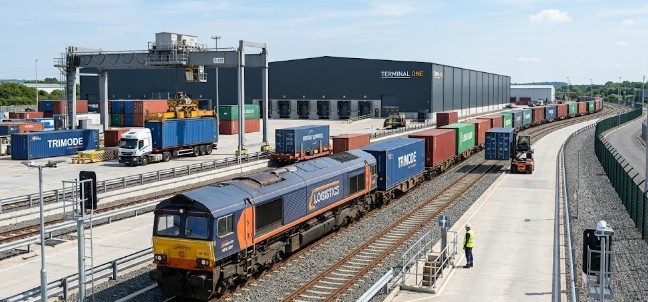
A private freight terminal is a rail or intermodal facility owned by a private company rather than a railroad or public entity . These terminals are the backbone of supply chains for industries like manufacturing, agriculture, energy, and retail. But behind every private rail siding is a major financial decision.
Building a private freight terminal requires significant capital investment—often millions of dollars . Companies must evaluate financing options, insurance requirements, operational costs, and long-term return on investment. For CFOs and financial managers, understanding the economics of private rail terminals is as important as understanding their logistics.
This guide covers the financial side of private freight terminals—how companies fund them, what insurance they need, and how to evaluate whether the investment makes sense for your business.
Summary:
- Private freight terminals require major capital investment
- Financing options include loans, leases, and partnerships
- Insurance needs cover liability, cargo, and property
- Financial analysis determines whether the investment pays off
What Is a Private Freight Terminal? (Finance Context)
From a financial perspective, a private freight terminal is a capital asset—a long-term investment that requires careful planning and analysis.
| Financial Aspect | What It Means |
|---|---|
| Capital Expenditure | Land acquisition, track installation, equipment purchase |
| Operating Costs | Maintenance, staffing, utilities, insurance |
| Revenue Impact | Lower per-unit shipping costs, operational efficiency |
| Depreciation | Assets depreciate over time, affecting tax liability |
| Financing | Loans, leases, or corporate capital |
Unlike public terminals where companies pay per-use fees, a private terminal shifts costs from variable to fixed . This can create economies of scale for high-volume shippers but carries risk if volume drops.
Summary:
- Private terminals are capital assets requiring significant upfront investment
- Costs shift from variable (per-use) to fixed (ownership)
- Financial analysis must account for depreciation and tax implications
- Volume consistency is key to positive ROI
Financing a Private Freight Terminal
Companies have several options for financing a private freight terminal.
Traditional Bank Loans
Banks familiar with industrial real estate and rail infrastructure can provide term loans for terminal construction . These typically require a down payment (20-30%) and offer 10-20 year repayment terms.
Equipment Financing
Specialized equipment—cranes, loaders, railcars—can be financed separately through equipment lenders . This spreads the capital burden and matches asset life to repayment schedules.
Lease Structures
Some companies lease rail sidings from railroads or industrial park developers rather than owning them outright . This reduces upfront capital requirements but may have higher long-term costs.
Public-Private Partnerships
In some cases, local economic development agencies offer incentives or co-investment for rail infrastructure that serves multiple businesses . This can reduce the financial burden on individual companies.
| Financing Option | Best For | Trade-Offs |
|---|---|---|
| Bank Loan | Established companies with strong credit | Requires down payment, interest costs |
| Equipment Financing | Specialized machinery | Separate from real estate financing |
| Lease | Companies wanting lower upfront cost | Higher long-term costs |
| Public-Private | Multi-tenant facilities | Shared control |
Summary:
- Multiple financing options exist for private terminals
- Loans require down payment and credit approval
- Leasing reduces upfront capital but may cost more long-term
- Public-private partnerships can share costs and risks
Insurance for Private Freight Terminals
Like any industrial facility, private freight terminals require comprehensive insurance coverage.
Key Insurance Policies
| Policy | What It Covers |
|---|---|
| Property Insurance | Buildings, tracks, equipment, inventory |
| General Liability | Third-party injury or property damage |
| Cargo Insurance | Freight in transit or storage |
| Workers’ Compensation | Employee injuries |
| Railroad Protective Liability | Specific coverage for rail operations |
| Business Interruption | Lost income from covered events |
Why Insurance Costs Matter
Insurance premiums for rail facilities are influenced by:
- Safety record and operational history
- Cargo types handled (hazardous materials increase premiums)
- Security measures in place
- Location and risk factors
Risk Management
Companies with private terminals often implement robust risk management programs to control insurance costs, similar to how trucking companies manage commercial vehicle insurance to protect their fleets. This includes regular safety training, equipment inspections, and emergency response planning.
Summary:
- Private terminals need specialized insurance coverage
- Railroad protective liability is essential for rail operations
- Cargo type significantly affects insurance costs
- Risk management programs help control premiums
Financial Benefits of Private Freight Terminals
When properly executed, a private freight terminal can deliver significant financial returns.
Cost Savings
| Cost Factor | Savings |
|---|---|
| Per-Unit Shipping | Rail is 3-4x more fuel-efficient than truck |
| Terminal Fees | Eliminate per-car fees charged by public terminals |
| Inventory Carrying Costs | On-site storage reduces warehousing expenses |
| Damage Claims | Reduced handling means less product damage |
Operational Efficiency
Private terminals allow companies to:
- Align rail schedules with production, not terminal hours
- Reduce dwell time for railcars
- Integrate directly with manufacturing or warehousing
- Improve supply chain visibility
Tax Considerations
Depreciation of rail assets can provide tax benefits. The IRS categorizes rail track and structures under specific asset classes with defined depreciation schedules . Companies should consult tax professionals to optimize these benefits.
Summary:
- Rail is significantly more fuel-efficient than truck
- Eliminating terminal fees reduces per-unit costs
- Operational efficiency improves supply chain performance
- Tax depreciation provides additional financial benefit
Financial Risks and Challenges
Private freight terminals also carry financial risks that companies must manage.
Capital Risk
The upfront investment—often millions of dollars—ties up capital that could be used elsewhere . If shipping volume declines, the terminal becomes an underutilized asset.
Fixed Cost Burden
Unlike public terminals where costs vary with usage, private terminals have significant fixed costs . Maintenance, staffing, and insurance must be paid regardless of volume.
Regulatory Compliance
Compliance with federal, state, and local rail regulations requires ongoing investment in safety, training, and equipment . Non-compliance can result in fines or operational shutdowns.
Market Volatility
Changes in commodity prices, trade policy, or customer demand can affect shipping volumes . Companies must build flexibility into their financial planning.
| Risk | Mitigation Strategy |
|---|---|
| Capital Risk | Phased construction, lease options |
| Fixed Costs | Accurate volume forecasting |
| Regulatory | Regular compliance audits |
| Market Volatility | Diversify cargo types, flexible contracts |
Summary:
- Significant capital investment ties up resources
- Fixed costs must be paid regardless of volume
- Regulatory compliance requires ongoing investment
- Market changes can affect terminal utilization
Return on Investment (ROI) Analysis
Companies considering a private freight terminal should conduct a thorough ROI analysis.
Key Metrics
| Metric | What It Measures |
|---|---|
| Payback Period | Time to recover initial investment |
| Internal Rate of Return (IRR) | Annualized return on investment |
| Net Present Value (NPV) | Value of future cash flows in today’s dollars |
| Cost per Unit | Total cost divided by volume shipped |
Sample ROI Calculation Factors
- Annual shipping volume (rail cars or tons)
- Current per-unit shipping cost (public terminal fees)
- Projected per-unit cost with private terminal
- Capital investment (land, track, equipment)
- Annual operating costs (maintenance, staffing, insurance)
- Financing costs (interest on loans)
- Tax benefits (depreciation)
Break-Even Analysis
The break-even point is the volume at which total cost of a private terminal equals the cost of using public terminals . Companies with consistent volume above this threshold typically achieve positive ROI.
Summary:
- ROI analysis requires accurate volume forecasting
- Payback period typically ranges from 5-15 years
- Break-even analysis identifies minimum volume needed
- Tax benefits improve overall returns
Frequently Asked Questions
1. How much does it cost to build a private freight terminal?
Costs vary widely. A basic rail siding can cost $500,000 to $2 million. A full terminal with transload facilities, storage, and equipment can cost $5 million to $20 million or more .
2. What financing options are available?
Options include traditional bank loans, equipment financing, leases, and public-private partnerships . Industrial development bonds may also be available in some areas.
3. What insurance is required for a private freight terminal?
Required insurance typically includes property, general liability, cargo, workers’ compensation, and railroad protective liability . Additional coverage depends on cargo type and operations.
4. How long does it take to recoup the investment?
Payback periods typically range from 5 to 15 years, depending on volume, current shipping costs, and capital investment . Higher volume and higher existing costs shorten payback periods.
5. What are the tax benefits of owning a private freight terminal?
Rail assets can be depreciated over time, reducing taxable income . Companies should consult tax professionals to understand specific benefits.
6. How does rail compare to truck shipping costs?
Rail is generally 3-4 times more fuel-efficient per ton-mile than truck, resulting in significantly lower per-unit shipping costs for bulk and long-distance freight .
7. What industries benefit most from private freight terminals?
Manufacturing, agriculture, energy, chemicals, and retail with consistent high-volume shipping benefit most .
8. Can small businesses afford private freight terminals?
Small businesses typically lack the volume to justify private terminals. Shared facilities or industrial parks with rail access are more practical options .
Summary: Private Freight Terminal Finance
A private freight terminal is a major financial decision that can transform a company’s logistics capability and cost structure. For businesses with consistent, high-volume rail shipping, the investment can pay off through lower per-unit costs, operational control, and tax benefits.
Key Takeaways
- Private terminals require significant capital investment – often millions of dollars
- Multiple financing options exist – loans, leases, equipment financing, and public-private partnerships
- Insurance needs are specialized – including railroad protective liability and cargo coverage
- Financial benefits include lower shipping costs, operational efficiency, and tax depreciation
- Risks include fixed costs, regulatory compliance, and market volatility
- ROI analysis is essential – payback periods typically range from 5-15 years
- Success requires consistent volume – break-even analysis determines minimum needed
The most important takeaway? A private freight terminal is not just a logistics asset—it’s a financial commitment. Companies must evaluate financing options, insurance needs, and ROI carefully before making the investment. For the right business, the rewards can be substantial.
References
- BNSF Railway. “Industrial Development & Private Siding Guide.” 2026.
- Union Pacific Railroad. “Private Siding and Industrial Track Programs.” 2025.
- Federal Railroad Administration. “Private Rail Sidings: Safety and Operations.” 2026.
- Surface Transportation Board. “Private Track and Industrial Rail Access.” 2025.
- Association of American Railroads. “Rail Economics and Finance.” 2026.
Disclaimer:
The content provided is for informational purposes only. While efforts are made to ensure accuracy, no guarantees are given about completeness or reliability. Rail operations, financing terms, and regulations may vary by location and over time. Any action you take based on this information is at your own risk.