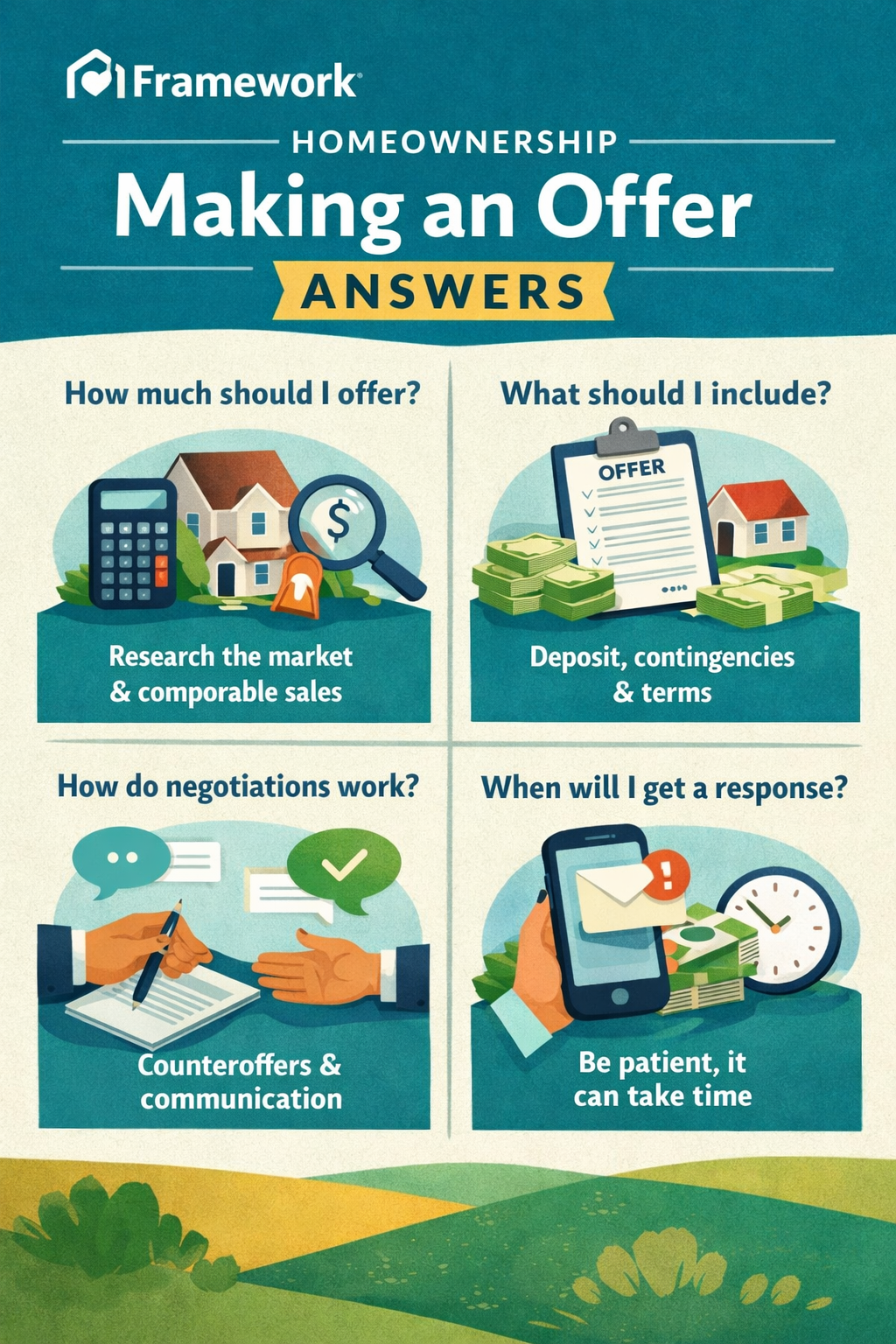
A framework homeownership making an offer answers provides buyers with a structured approach to submitting offers on properties. It ensures all financial, legal, and strategic considerations are covered, reducing mistakes and increasing the likelihood of successful purchase. This framework is especially useful in competitive housing markets where precision and timing can make the difference between winning and losing a property.
Definition and Purpose
A homeownership offer framework is a systematic guide that helps buyers structure offers effectively. Its purpose includes:
- Ensuring offers align with market values.
- Protecting buyers with legal and financial safeguards.
- Improving negotiation strength and credibility.
- Reducing emotional decision-making in competitive environments.
By following this framework, buyers can approach the home purchase process methodically, rather than relying on guesswork or intuition.
Key Components of the Framework
The essential components of a homeownership offer framework include:
- Property Valuation and Comparative Market Analysis (CMA)
Accurate valuation is critical. Buyers should assess comparable properties in the same area, considering size, condition, location, and amenities. A CMA provides a benchmark for determining a competitive yet realistic offer. - Buyer’s Financial Assessment
Understanding your financial situation is essential. This includes mortgage pre-approval, savings for down payment, closing costs, and emergency reserves. Lenders typically require a pre-approval letter to strengthen your offer. - Offer Price Strategy
Deciding on an offer price requires market insight. Buyers can choose to submit below, at, or above the listing price depending on demand, competition, and property condition. A strong offer is data-driven, not arbitrary. - Contingencies
Contingencies protect buyers against unforeseen risks. Common examples include inspection contingencies, financing contingencies, and appraisal contingencies. Properly crafted contingencies safeguard the buyer without weakening the offer. - Closing Timeline and Flexibility
Sellers often value flexible closing dates. Buyers who can adjust to the seller’s preferred timeline may have an advantage, especially in competitive markets. - Earnest Money and Deposits
Offering earnest money demonstrates commitment. The amount varies based on market conditions but should be significant enough to show seriousness without overcommitting funds.
Table: Offer Framework Components Comparison
| Component | Importance | Example/Notes |
|---|---|---|
| Market Analysis | High | CMA shows local price trends |
| Financing | Critical | Pre-approval strengthens offer |
| Contingencies | Medium | Protects buyer against risk |
| Earnest Money | Medium | Shows commitment; negotiable |
| Closing Flexibility | Medium | Align with seller’s needs |
Benefits of Using a Structured Framework
Utilizing a structured homeownership offer framework provides multiple advantages:
- Increases credibility: Sellers are more likely to take offers seriously.
- Minimizes errors: Prevents overlooked legal or financial aspects.
- Reduces risk: Ensures buyers do not overpay or accept unfavorable terms.
- Improves confidence: A methodical approach reassures buyers throughout the process.
(Based on industry best practices from the National Association of Realtors)
Step-by-Step Guide to Making an Offer
A well-planned offer follows distinct steps that align with the homeownership framework.
Step 1 – Market Research and Property Analysis
Before making an offer, buyers should conduct thorough research:
- Identify comparable properties in the same neighborhood.
- Evaluate features, size, age, and condition relative to price.
- Assess local market trends: seller’s market vs. buyer’s market.
This step ensures that offers are realistic and competitive. Ignoring market data can result in overpaying or underbidding, potentially losing the property.
Step 2 – Financial Preparation
Financial readiness is crucial for a successful offer:
- Pre-approval: Obtain mortgage pre-approval to demonstrate financing ability.
- Budgeting: Account for down payment, closing costs, insurance, taxes, and maintenance.
- Contingency funds: Maintain reserves for unexpected expenses, such as repairs or appraisal gaps.
Proper preparation signals to sellers that the buyer is serious and financially capable.
Step 3 – Structuring the Offer
Once research and preparation are complete, the buyer can craft the offer:
- Set a price aligned with CMA insights.
- Include essential contingencies (inspection, financing, appraisal).
- Specify earnest money deposit.
- Outline preferred closing date and flexibility terms.
Structured offers increase the likelihood of acceptance, especially when competition is high.
Step 4 – Negotiation Strategy
Negotiation is a critical stage of the home purchase:
- Responding to counteroffers: Know your maximum budget and stick to it.
- Timing and communication: Prompt and professional responses improve credibility.
- Agent support: Experienced agents can provide strategic guidance, increasing offer success.
Summary
Quick Takeaway:
A structured framework balances market insights, financial readiness, and strategic negotiation, forming the core of the framework homeownership making an offer answers. Buyers who follow the framework homeownership making an offer answers steps increase the probability of having their offers accepted while reducing potential risks, ensuring both financial security and competitive positioning in the housing market. By integrating data-driven pricing, contingency planning, and timely responses, the framework homeownership making an offer answers helps buyers approach negotiations methodically rather than relying on guesswork or reactive decisions.
Common Challenges and Solutions in Making an Offer
Even with a framework, challenges may arise.
Competitive Market Issues
In multiple-offer situations, buyers may face:
- Losing to higher bids
- Offers rejected due to timing
Solutions:
- Use escalation clauses to automatically increase your offer within a set limit.
- Offer flexible closing dates or limited contingencies to appeal to the seller.
Financing Hurdles
Delays or denials in loan approval can compromise an offer.
Solutions:
- Secure pre-approval early.
- Adjust budget and payment plans as necessary.
Contingency Conflicts
Disputes over inspections or appraisals can derail offers.
Solutions:
- Include clear, well-defined contingencies in the contract.
- Hire professional inspectors to validate property condition.
also read: https://fundbulletins.com/voozon/
Table: Challenges vs Solutions
| Challenge | Solution | Notes |
|---|---|---|
| Multiple Offers | Escalation Clause | Automatic price increase within limit |
| Financing Delay | Pre-Approval | Strengthens credibility of offer |
| Inspection Issues | Contingency Negotiation | Protects buyer, avoids deal loss |
Takeaways
- Market research is essential; offers without data are weak.
- Financial readiness is a prerequisite for strong offers.
- Structured frameworks reduce errors and improve negotiation success.
- Flexibility and professionalism increase appeal to sellers.
Negotiation and Closing Strategies in Homeownership
Once a buyer has structured their framework homeownership making an offer answers in Section 1 and submitted the initial offer, the next key phases are negotiation and closing. These stages determine whether the offer becomes a legally binding purchase contract and, ultimately, successful homeownership. (According to real estate industry standards)
Negotiation Tactics for Buyers
Negotiation is not solely about price. A well‑executed negotiation strategy, guided by the framework homeownership making an offer answers, can secure better terms, increase the chances of offer acceptance, and reduce financial risk. By using this structured framework, buyers can strategically balance contingencies, closing timelines, and earnest money deposits, ensuring their offers are competitive without exceeding budget limits. Applying the framework homeownership making an offer answers also helps buyers anticipate seller priorities, leverage appraisal data, and respond effectively to counteroffers, improving the likelihood of a successful transaction.
Key Things You Can Negotiate
- Purchase price and seller credits — Buyers may ask for price reductions or credits at closing.
- Closing date and possession timing — Aligning with the seller’s timeline can make your offer more attractive.
- Contingency terms — Adjusting or structuring contingencies strategically can lower seller risk.
- Included fixtures/appliances — Clarifying what stays with the property avoids disputes later.
- Earnest money amount — A higher yet reasonable earnest money deposit demonstrates serious intent.
Best Negotiation Practices
- Appear financially ready — Provide proof of mortgage pre-approval and solid financing documentation.
- Don’t reveal your maximum price early — A common negotiation tactic is to start with a strong yet realistic offer and adjust as needed based on market data and seller response.
- Focus on value, not just price — Flexibility on contingencies or closing dates can sometimes be more persuasive than a higher dollar offer.
Tip: In competitive markets, buyers may waive or shorten certain contingencies (like inspection windows) only if they understand the risks and have done due diligence before submitting the offer.
Role of Real Estate Agents and Advisors
Professional real estate agents and advisors are critical when navigating negotiations in the homeownership journey.
How Professionals Enhance Your Offer
- Market expertise: Agents understand local trends and help position offers that align with current demand and pricing dynamics.
- Communication and strategy: Skilled agents draft structured offers and advise on negotiation responses (accept, counteroffer, or walk away) promptly.
- Legal compliance: Agents and real estate attorneys ensure that contracts obey applicable laws and protect buyer interests.
Pro Tip: Negotiations often include back‑and‑forth counteroffers. You can accept the seller’s counteroffer, make your own counteroffer, or choose to walk away and revise your strategy.
Closing the Deal
After negotiation concludes with an accepted offer, buyers enter the critical phase of closing the deal, where every step must be executed carefully to finalize the home purchase. Utilizing the framework homeownership making an offer answers ensures that buyers follow a structured, risk-managed approach, reducing errors and confirming that all contractual obligations are fulfilled before ownership transfer. Proper application of this framework strengthens financial preparedness, legal compliance, and overall confidence in the transaction.
Inspections, Appraisals, and Due Diligence
The framework homeownership making an offer answers emphasizes that closing is not simply a signing process; it involves comprehensive verification steps to ensure the property meets expectations, is accurately valued, and that the buyer is fully informed before committing funds. These steps include inspections, appraisals, and final due diligence.
Home Inspections
A professional home inspection provides buyers with a detailed assessment of the property’s condition, including structural elements, plumbing, electrical systems, HVAC, roofing, and potential safety hazards. Integrating inspections into the framework homeownership making an offer answers allows buyers to identify issues that may require repair or renegotiation. For example, if an inspection uncovers a leaking roof or outdated wiring, the buyer can request that the seller complete repairs or provide credits at closing, ensuring that the purchase aligns with the property’s actual condition. Furthermore, inspection reports serve as documented evidence for negotiations and future property maintenance planning.
Appraisals
Lender-required appraisals verify the property’s market value and are a key element in the framework homeownership making an offer answers. If the appraisal comes in below the agreed-upon offer price, buyers can leverage the report to renegotiate the purchase price, request seller concessions, or adjust financing plans. Understanding how to integrate appraisal data into decision-making is crucial, as it prevents buyers from overpaying and protects lender interests. Advanced buyers often incorporate AI-supported valuation tools as part of the framework homeownership making an offer answers, which analyze local market trends and comparable sales to anticipate potential appraisal discrepancies before they arise.
Final Walkthrough
The final walkthrough occurs shortly before closing and is an essential step in the framework homeownership making an offer answers. During this visit, buyers verify that all agreed repairs have been completed, appliances and fixtures are in place, and no new damage has occurred since the inspection. This step ensures that the property matches the condition represented in the offer, providing confidence that no last-minute surprises will compromise the transaction. Buyers should carefully check areas previously flagged in inspections, confirm that any negotiated repairs are completed satisfactorily, and document findings for their records.
Due Diligence and Contractual Compliance
Due diligence extends beyond inspections and appraisals and is a critical element of the framework homeownership making an offer answers. Buyers should review all legal documents, title reports, and disclosures to confirm there are no liens, encumbrances, or unresolved claims on the property. Additionally, confirming that financing, insurance, and escrow arrangements are complete ensures a smooth closing process. Applying a structured framework at this stage prevents costly mistakes, protects the buyer’s investment, and ensures all contractual terms are met before funds and title are transferred.
Leveraging Digital Tools and AI
The framework homeownership making an offer answers increasingly integrates digital tools and AI-based solutions for closing. For example, automated document verification platforms can cross-check legal compliance and ensure all contingencies are addressed, while digital scheduling tools help coordinate inspections, appraisals, and walkthroughs efficiently. Using these tools not only reduces human error but also accelerates the closing timeline, which is especially valuable in competitive markets.
Strategic Risk Management
A structured approach to closing within the framework homeownership making an offer answers also emphasizes risk management. Buyers should verify that their escrow account holds sufficient funds for closing costs, taxes, and insurance. They should also ensure that any repair credits or seller concessions are documented clearly in the closing statement. This prevents disputes and provides legal protection in case discrepancies arise after the transaction.
Final Integration of the Offer Framework
By following the framework homeownership making an offer answers, buyers ensure that all closing steps—inspection, appraisal, walkthrough, and due diligence—are executed systematically. This integrated approach confirms that the home’s condition, value, and legal status align with the negotiated offer, giving buyers confidence in their investment and minimizing potential financial or legal issues post-closing.
Summary Takeaways:
- Home inspections validate property condition and support negotiation for repairs or credits.
- Appraisals confirm fair market value and help prevent overpayment.
- Final walkthroughs ensure the property matches agreed-upon terms.
- Due diligence safeguards against liens, title issues, or legal complications.
- Digital tools and AI enhance accuracy, efficiency, and risk management.
Tools and Resources That Support Offers and Negotiations
Using digital tools can improve your ability to analyze market trends, calculate your budget, and prepare offers with greater accuracy, which is a key component of the framework homeownership making an offer answers. By integrating analytics platforms, automated calculators, and AI-powered market insights into the framework homeownership making an offer answers, buyers can make data-driven decisions, optimize offer timing, and structure competitive proposals that align with current market conditions, increasing the likelihood of successful home purchase outcomes.
Online Valuation and Market Insight Tools
| Tool | Purpose | How It Helps |
|---|---|---|
| Property valuation platforms (e.g., Zillow, Redfin) | Estimate home values | Helps set offer prices based on comps |
| Mortgage calculators | Estimate monthly payments | Ensures financial feasibility |
| Real estate CRM platforms | Track offers and negotiations | Improves communication flow |
These tools support data‑backed decisions, which is a critical part of the framework homeownership making an offer answers process.
Semantic Insights and Expert Tips
This section provides advanced guidance for buyers using the framework homeownership making an offer answers, combining practical advice with AI-supported tools to improve offer quality and decision-making accuracy. Following these insights ensures your offers are competitive, legally sound, and aligned with current market trends.
Common Mistakes to Avoid
Even experienced buyers often encounter errors when making an offer. Using a framework homeownership making an offer answers helps identify and avoid these mistakes before they impact the transaction.
- Ignoring Market Data
Buyers frequently submit offers without analyzing comparable properties or understanding market trends. The framework homeownership making an offer answers emphasizes the importance of a Comparative Market Analysis (CMA). By reviewing sales data, property size, condition, and neighborhood trends, buyers can avoid overpaying or submitting unrealistic offers. Leveraging AI tools to track market fluctuations ensures decisions are data-driven and minimize financial risk. - Underestimating Closing Costs
A common oversight in home buying is failing to budget for closing costs. These may include title insurance, recording fees, transfer taxes, and homeowner’s insurance. The framework homeownership making an offer answers integrates these considerations into the financial preparation stage. By calculating accurate closing cost estimates in advance, buyers can prevent financing surprises and maintain sufficient reserves, which also strengthens their negotiation credibility. - Weak or Improperly Structured Contingencies
Contingencies are essential to protect the buyer, but too many or poorly defined contingencies can weaken an offer. Conversely, removing contingencies without understanding risks can be costly. The framework homeownership making an offer answers outlines how to craft precise contingencies that balance protection with competitiveness. For example, inspection contingencies should clearly define allowable issues, while financing contingencies must align with lender requirements. This approach prevents disputes and protects the buyer while keeping the offer attractive to sellers.
Real Estate Insights
Incorporating AI into your framework homeownership making an offer answers can significantly improve offer strategy, timing, and risk assessment.
- Predictive Market Analytics
AI-driven tools can forecast neighborhood price trends based on historical sales, seasonal patterns, and economic indicators. Integrating these insights into the framework homeownership making an offer answers allows buyers to anticipate price adjustments, set realistic offer ranges, and identify the optimal moment to submit an offer. - Automated Alerts for Market Listings
Configuring alerts via AI platforms ensures buyers receive instant notifications for new or updated listings. Using the framework homeownership making an offer answers, buyers can respond quickly to competitive properties, improving the probability of acceptance by acting faster than traditional buyers. - Appraisal Gap Calculators and Risk Assessment
AI tools can evaluate potential appraisal gaps and highlight financial risks if a property appraises below the offer price. By integrating these tools into the framework homeownership making an offer answers, buyers can structure offers that minimize risk while maintaining competitiveness, such as adjusting contingencies or preparing supplementary funds. - Behavioral and Seller Insight Analysis
Advanced AI models can analyze historical seller behaviors, including response time, negotiation flexibility, and common concessions. Buyers using the framework homeownership making an offer answers can leverage these insights to design tailored offers that appeal specifically to seller priorities, increasing the likelihood of acceptance.
Frequently Asked Questions
- What happens after my offer is accepted?
- How do appraisal results affect my offer?
- Can I include contingencies after negotiation starts?
- What negotiation strategies work in a seller’s market?
- How long does closing typically take?
References
- NerdWallet – How to Make an Offer on a House in 7 Steps (Comprehensive offer steps & negotiations) How to Make an Offer on a House in 7 Steps
- Real Estate Negotiation Strategies (Propphy) (Offers, contingencies, and negotiation variables) Real Estate Negotiation Strategies: The 2026 Playbook
- NerdWallet – Homebuying Guide (Home buying process including offer preparation) How to Buy a House: 15 Steps in the Homebuying Process
- Expert negotiation insight (Negotiation beyond price) 10 Real Estate Negotiation Strategies From An Expert